

Al Ain Oasis is a 130-hectare heritage landscape in Central Al Ain, known for its date palms, shaded pathways and traditional falaj irrigation. You can walk among cultivated farm plots and visit facilities that explain how the oasis and its water system work.
Top Hotel Apartments is a hotel in Al Ain.
- Location: Al Tuhaf Street, Central Al Ain, Abu Dhabi, United Arab Emirates.
- Opening pattern: Open daily
- Heritage: Part of the Cultural Sites of Al Ain UNESCO World Heritage Site since 2011.
- Facilities: Eco-Centre, Oasis Garden, Miniature Oasis and Falaj Exhibition.
What makes Al Ain Oasis distinctive
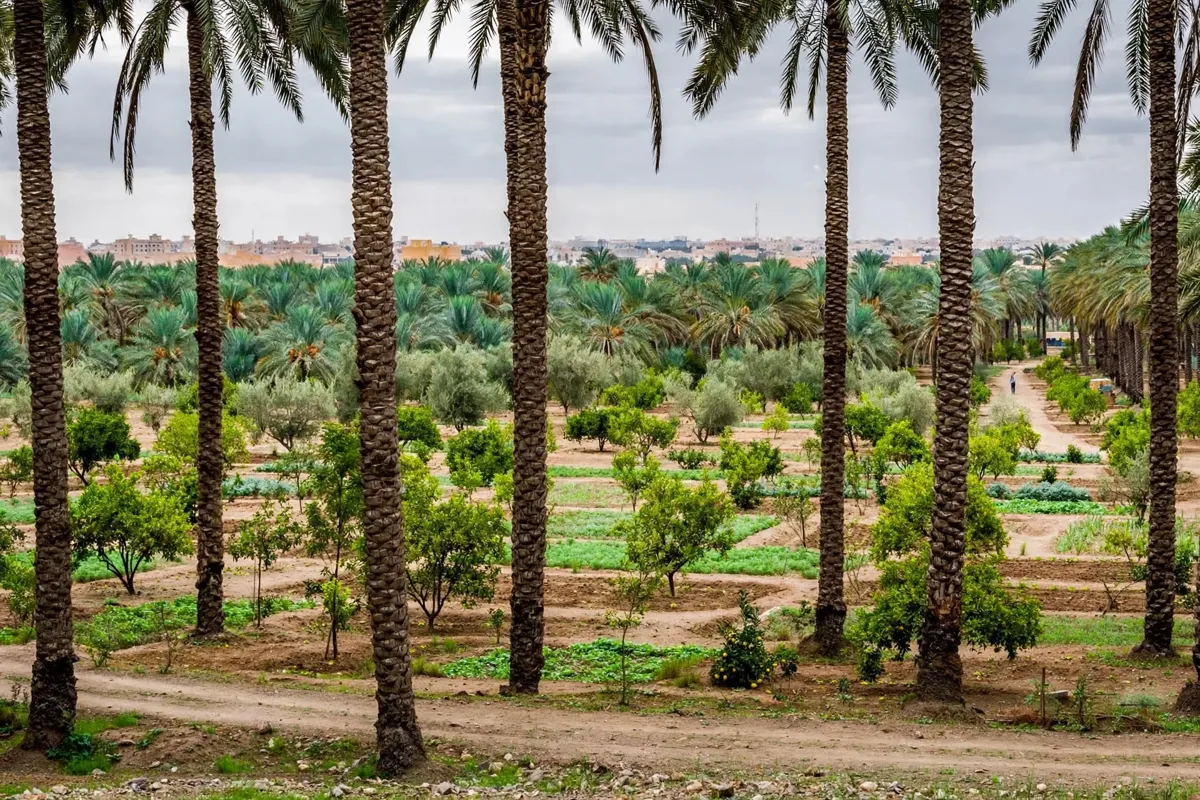
Al Ain Oasis is a cultivated landscape where date palms and other fruit trees grow alongside traditional farm plots. Farmers continue to cultivate more than 80,000 date palms across the oasis, as well as mango, orange, banana, fig and sidr trees.
Opened to the public in 2016, the oasis includes an Eco-Centre and shaded pathways. The landscape remains part of the Cultural Sites of Al Ain UNESCO World Heritage Site, reflecting its place in the region’s heritage.
The Eco-Centre uses interactive screens and educational activities to introduce the oasis. In the Oasis Garden, three sections display plants found in traditional oasis farms, giving you a closer look at the range of crops associated with this landscape.
Walking through the oasis
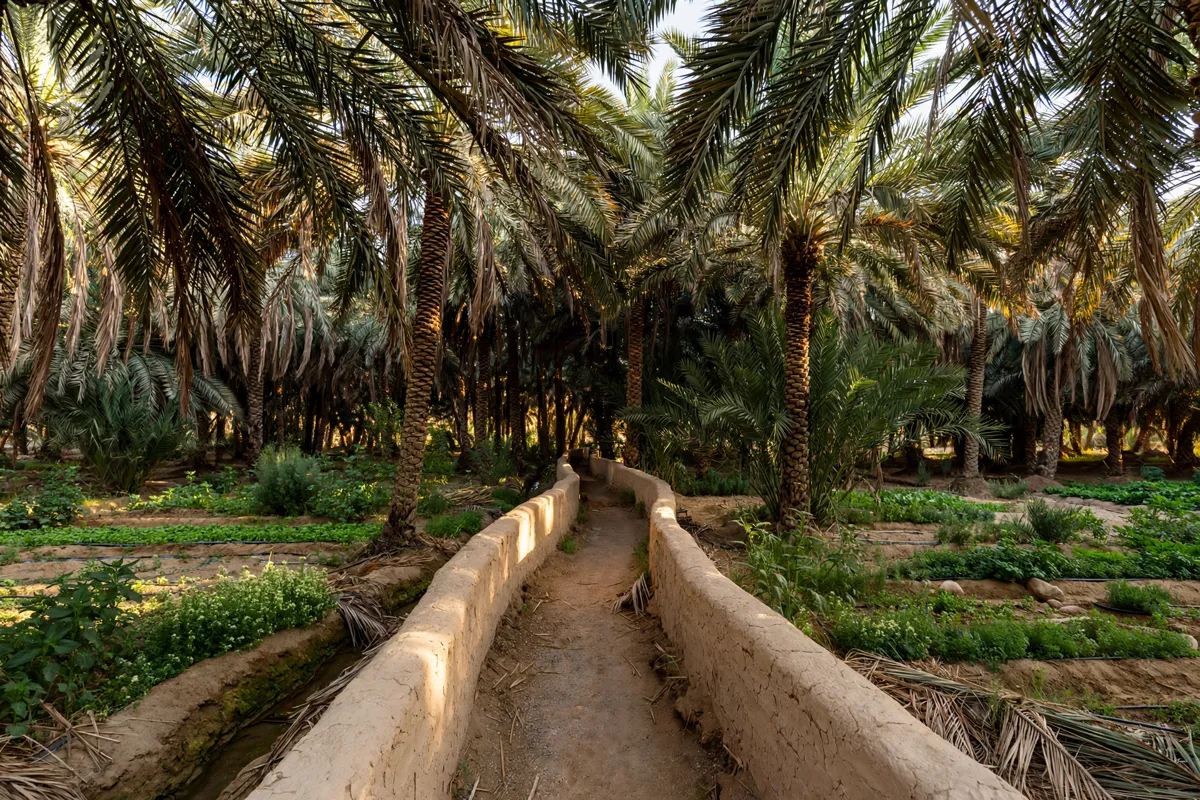
Shaded pathways let you explore Al Ain Oasis on foot, passing palms and cultivated plots. The landscape covers a broad area, so you can take a relaxed route through the groves and pause at the facilities that explain what you are seeing.
A visitor map marks the oasis entrances and farm plots, along with falaj channels. It also shows practical points including a parking garage, taxi stand, tour-bus pick-up and drop-off, shuttle stops, and bicycle pick-up and drop-off. Use the map to orient yourself at the entrance and choose which parts of the oasis to visit.
The Miniature Oasis offers a model of how and why the oasis was built. It shows the distribution of water through aflaj channels and the forts that surrounded the oasis, making it a useful stop before or after a walk among the farm plots.
Falaj irrigation and date-palm heritage
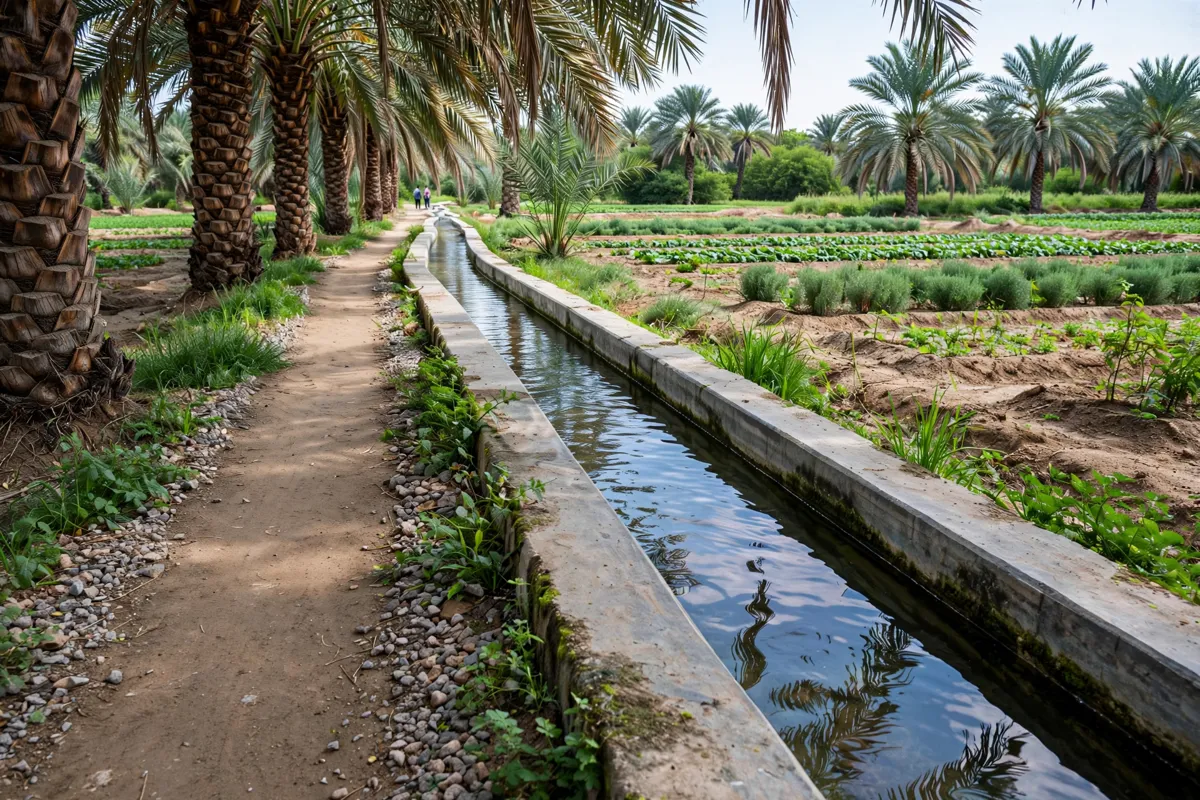
The traditional falaj irrigation system nourishes Al Ain Oasis. These channels carry water to the cultivated land, supporting the palms and other crops that remain part of the oasis today.
Historically, the oasis was fed by the Muwaiji falaj, an underground water channel that ran east–west beneath the modern city from a source in the mountain foothills. The Falaj Exhibition and the Miniature Oasis help explain this system and how water was distributed through the landscape.
Look for the channels as you walk, then use the model to understand their wider layout. Together, the outdoor setting and the educational displays connect the working farm plots with the engineering that has sustained them.
Access, facilities and nearby heritage stops
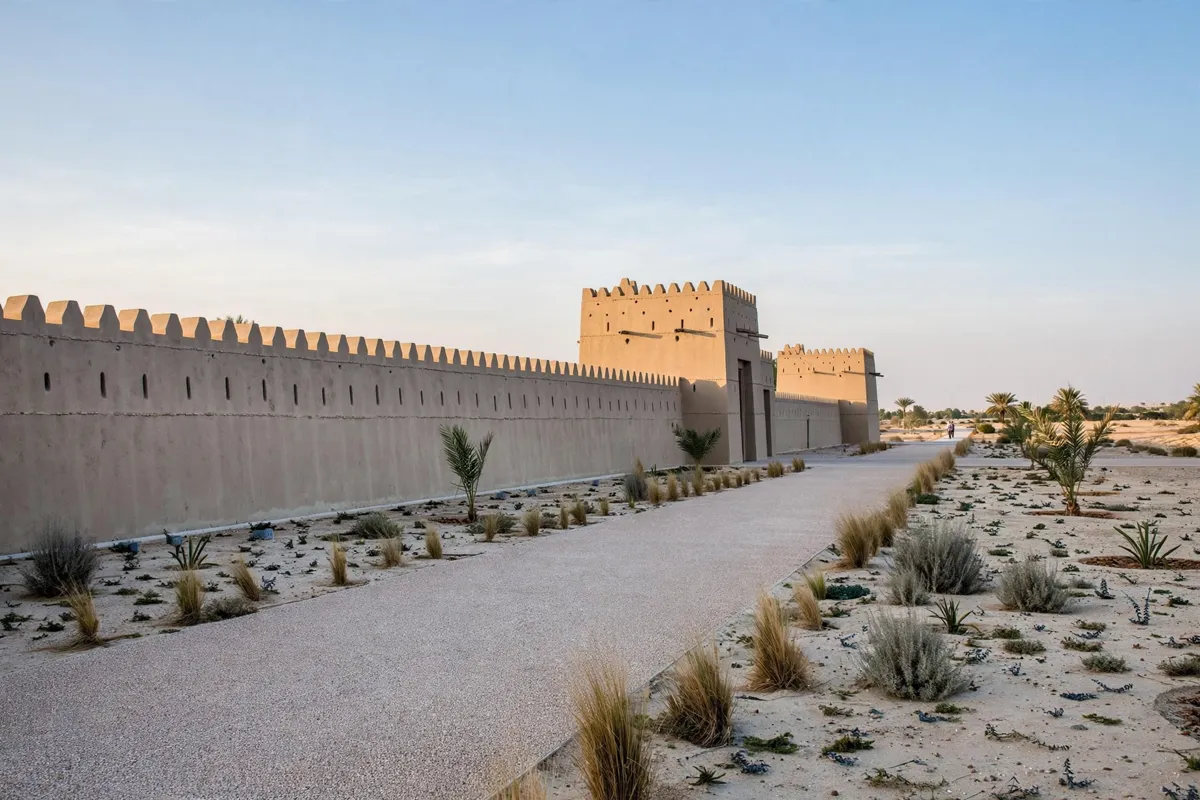
Al Ain Oasis is at Al Tuhaf Street in Central Al Ain, and its visitor map marks entrances, transport points and facilities across the site. The oasis has an Eco-Centre, Oasis Garden, Miniature Oasis and Falaj Exhibition, so you can combine a walk with time learning about its crops and irrigation.
Qasr Al Muwaiji is about 500 metres north of Al Ain Oasis. Believed to have been built in the early years of the 20th century, it was Sheikh Zayed bin Sultan Al Nahyan’s home and diwan from 1946 to around 1960.
For a wider heritage visit, the Al Ain National Museum guide covers another cultural stop in the city.
Opening hours may vary during Eid holidays, so check the official site before you go. The Department of Culture and Tourism lists the oasis contact number as +971 3 711 8251.
Al Jahili Fort adds another stop focused on the city’s history; its story is covered in a guide to Al Jahili Fort.
FAQs
Is Al Ain Oasis a UNESCO World Heritage Site?
Yes. It has been part of the Cultural Sites of Al Ain UNESCO World Heritage Site since 2011.
What can you see at Al Ain Oasis?
The oasis has date palms, other fruit trees, cultivated farm plots, falaj channels and visitor facilities including an Eco-Centre and Falaj Exhibition.
How does the falaj system support the oasis?
The traditional falaj system supplies water to the cultivated landscape. Historically, the Muwaiji falaj carried water underground from the mountain foothills beneath the modern city.
Is there another heritage site close to Al Ain Oasis?
Qasr Al Muwaiji is about 500 metres north of the oasis and has a history linked to Sheikh Zayed bin Sultan Al Nahyan.