

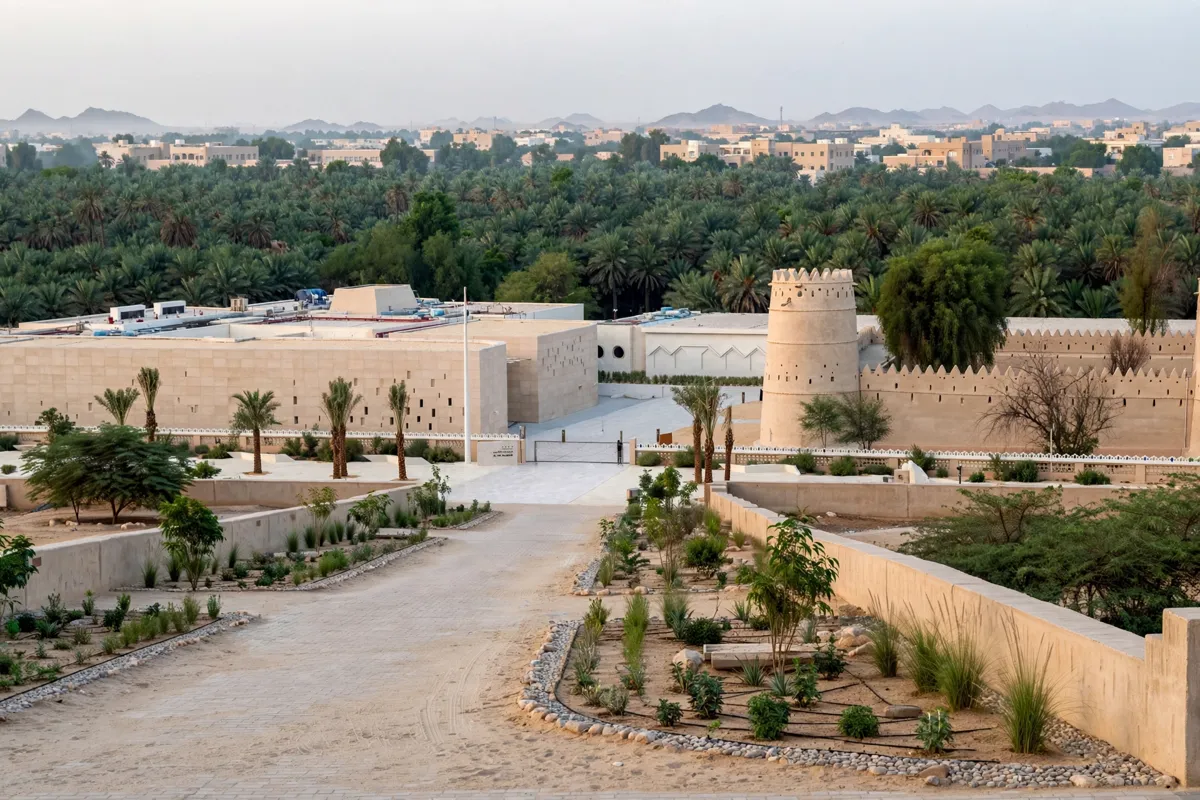
Al Ain National Museum in Al Ain, United Arab Emirates, tells the story of the region from the Stone Age to the foundation of the UAE. Set on the eastern edge of Al Ain Oasis, it brings archaeological collections together with Sultan Fort and exhibition galleries built around remains found on site.
- Location: 46 Al Mut-haf Street, on the eastern edge of Al Ain Oasis.
- From Top Hotel Apartments: about a 10-minute walk to the museum.
- Opening pattern: official listings differ: one gives daily hours of 9 AM–7 PM, while another gives 8:30 AM–7 PM except Monday, with Friday hours of 3 PM–7 PM. Last entry on the visitor page is at 6:45 PM.
- Tickets: admission is charged, with discounted and free entry for select categories; online booking and walk-ins are available subject to capacity.
What Al Ain National Museum covers
Al Ain National Museum covers the area’s history from the Stone Age through the foundation of the United Arab Emirates. The collection includes archaeological finds from sites across the region, placing objects in a longer account of life and settlement in Al Ain.
The museum was founded in 1969 under the guidance of Sheikh Zayed bin Sultan Al Nahyan. While its purpose-built home was under construction, a temporary exhibition was shown in Sultan Fort in 1969–70; the museum was inaugurated on 2 November 1971.
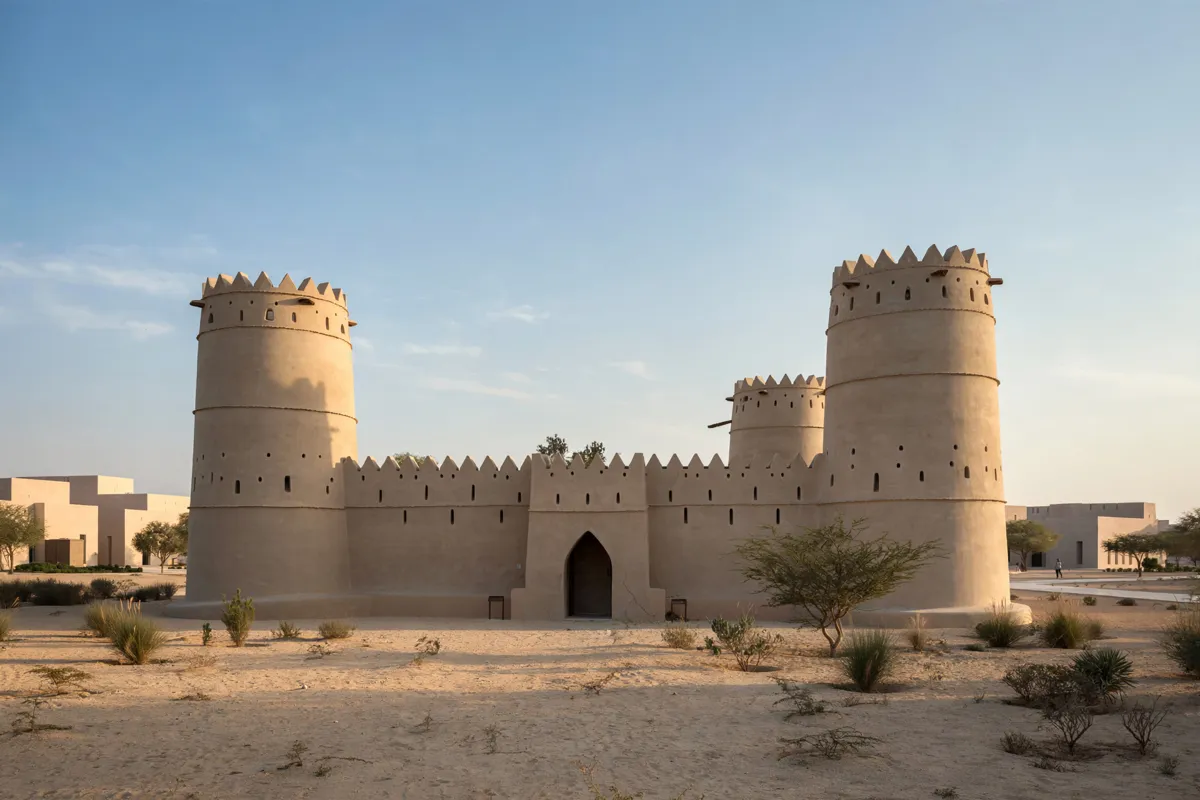
Sultan Fort, also known as the Eastern Fort, stands within the museum grounds. Built in 1910, the mudbrick fort has towers at three corners and a gate in its southern façade. Its presence connects the museum’s historical setting with the collections inside.
The Department of Culture and Tourism – Abu Dhabi identifies flint tools and arrowheads dating to the sixth millennium BCE among the archaeological collection. For a broader look at the oasis landscape and its heritage, you can combine the museum with an Al Ain Oasis walking route.
Collections and exhibits to look for
Al Ain National Museum’s collections include objects from several archaeological periods, alongside galleries that incorporate remains in their original locations. The official collection highlights offer a useful way to focus your visit.
Look for a gold ornament from Al Qattara Tomb dated 2000–1600 BCE, as well as a decorated stone vessel and a stamp seal with a foot motif from Hili Tomb B dated 2400–2000 BCE. Other highlighted finds include a copper dagger from Al Qattara Tomb dated 1500–1000 BCE and a camel figurine from Bidaa Bint Saud dated 1000–600 BCE.
The museum’s transformation restored its original 1970s structure, revitalised Sultan Fort and added four exhibition galleries. Three of those galleries are built around archaeological remains in situ, dating from the Iron Age to the Late Pre-Islamic period. That combination of objects and place-specific remains gives the galleries a direct connection to the archaeology of the region.
If you are planning a longer heritage day, the museum can form part of a one-day Al Ain itinerary that also includes the oasis and other cultural stops.
Opening information and visitor access
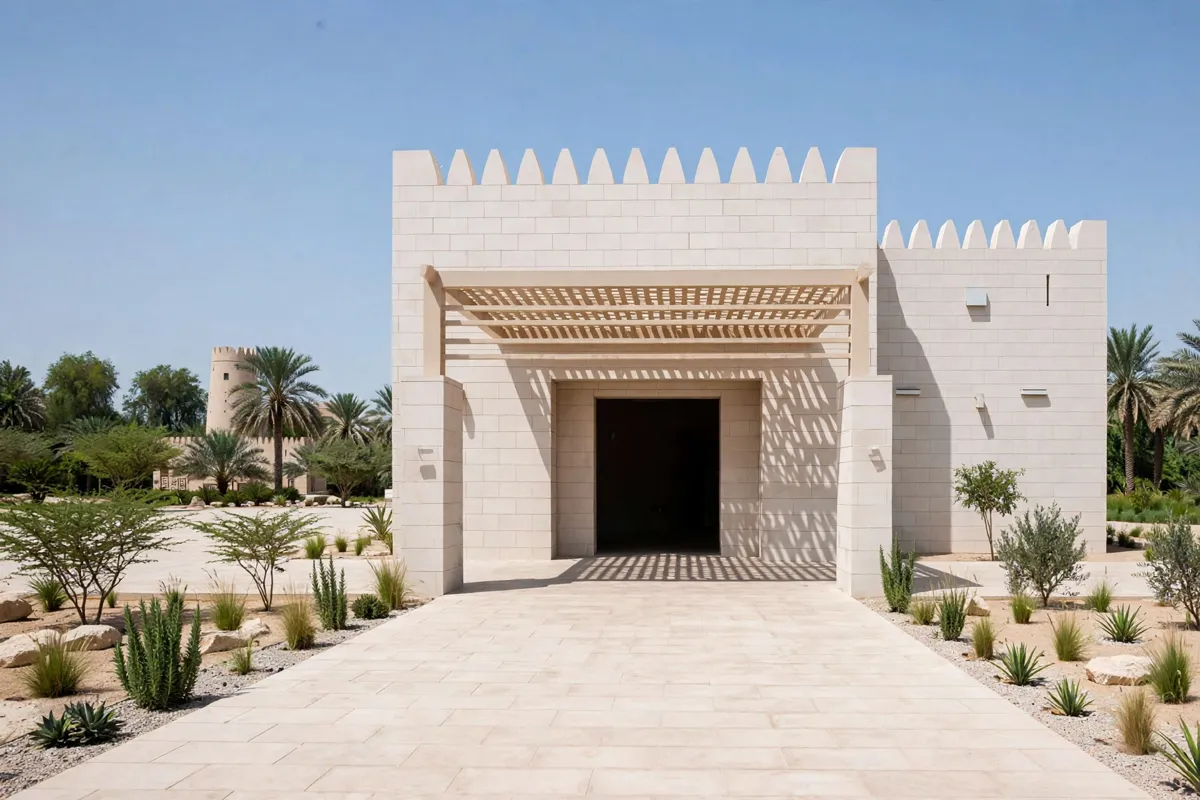
Opening hours vary between official listings, and special hours may apply during holidays or cultural events. Check the official site before you go.
Admission is charged, and the museum offers discounted and free entry options for select categories. You can book tickets online or try to enter as a walk-in, subject to capacity; consult the museum’s ticket information for the applicable prices and eligibility details.
The museum is wheelchair accessible, with ramps, lifts and dedicated restrooms. Accessible parking, a drop-off zone, pathways and facilities for guests of determination and visitors with mobility needs are also available. Free parking is near the main entrance.
Guided tours can be arranged upon request in Arabic and English, led by trained cultural guides. If you want a guide, contact the museum to ask about arranging one before your visit.
Walking to the museum from the hotel area
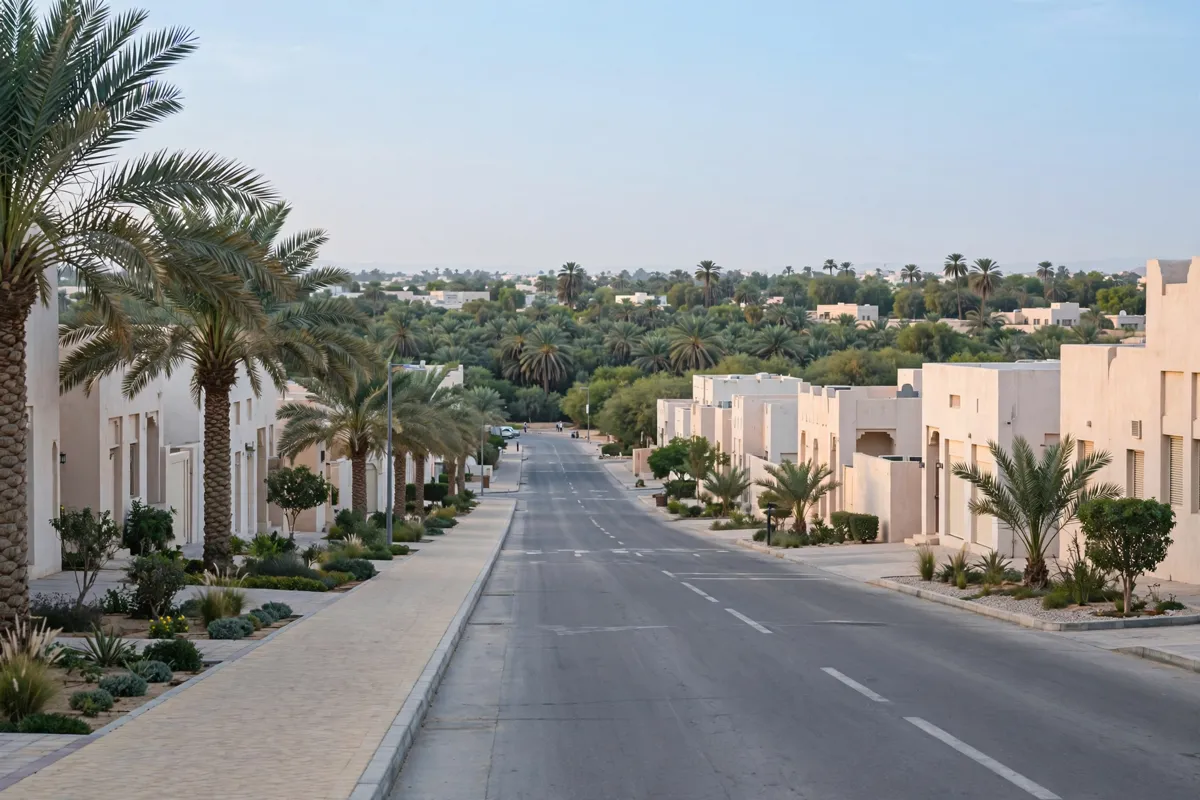
From Top Apartments rooms, the museum is about a 10-minute walk, or about 4 minutes by car. Its address is 46 Al Mut-haf Street, on the eastern edge of Al Ain Oasis.
The museum’s visit information identifies Al Ain Street 118 / Al Ain Palace Museum as the nearest bus stop, a four-minute walk away. It also describes the free Experience Al Ain shuttle as air-conditioned and wheelchair-accessible.
Al Ain Museum is near Al Jahili Fort and Al Ain Oasis, which is part of the Cultural Sites of Al Ain UNESCO World Heritage listing. If you are walking between heritage sites, the oasis is a natural nearby addition to the museum visit.
FAQs
What is the difference between Al Ain Museum and Al Ain National Museum?
They are two names for the same museum. It is also referred to as Al Ain Museum.
Can you arrange a guided tour?
Yes. Guided tours can be arranged upon request in Arabic and English with trained cultural guides.
Can you take photographs inside the museum?
Photography or filming for media or academic purposes requires a permit. Contact the museum in advance about those uses.
Is the museum close to Al Ain Oasis?
Yes. Al Ain National Museum is on the eastern edge of Al Ain Oasis, and the museum identifies the oasis as a nearby cultural site.